|
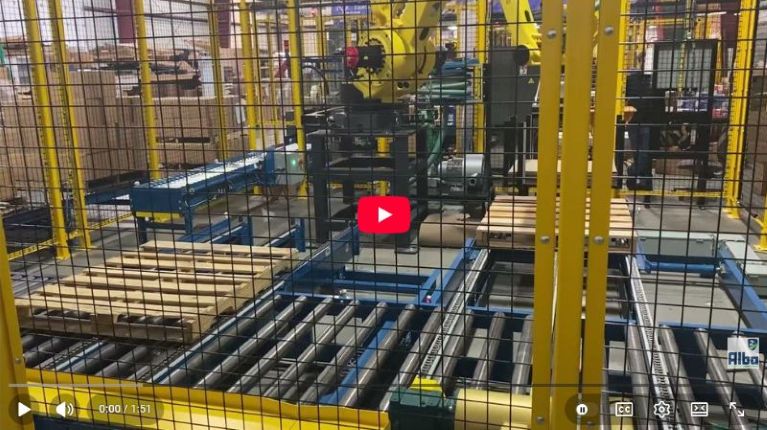
A 90° pallet transfer is common equipment in automated material handling systems. When palletized loads weigh several thousand pounds, the design of the transfer becomes critical.
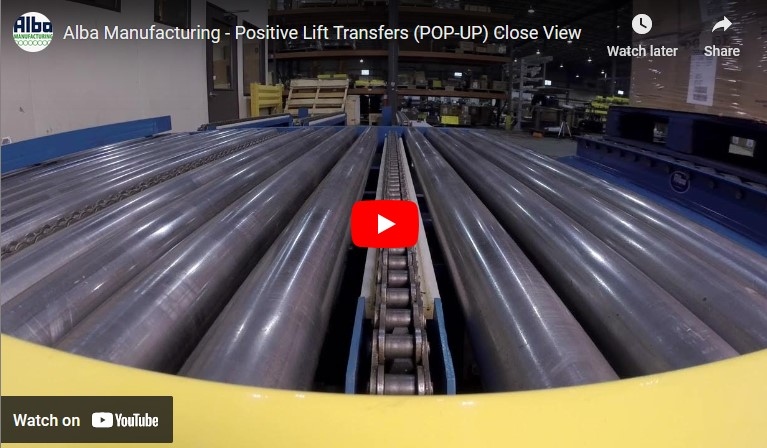
When transferring a full pallet, transfer chains must actuate between rollers to pick the pallet from the driven rollers, allowing the pallet to convey 90° from the original direction of travel.
Pallet construction, load weight and distribution, direction of travel, and load stability all influence the transfer's design and configuration.
An uneven or poorly lifting transfer can cause pallets to shift, become misaligned, or jam, potentially resulting in damaged products or equipment, unplanned downtime, and safety risks. |
 |
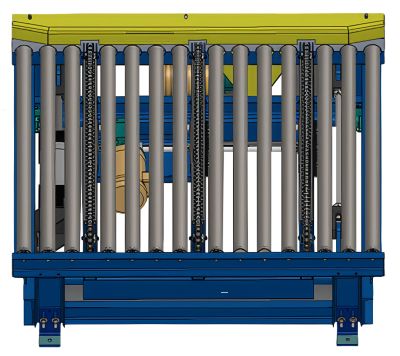 |
Alba Manufacturing's four-point positive-lift mechanism is engineered to minimize these problems by providing a controlled, level lift that helps maintain proper load support throughout the lifting process.
Incorporated into Alba's standard chain transfer designs, this standard heavy-duty mechanism can accommodate palletized loads up to 4,000 pounds.
What's Happening Beneath the Rollers? |
|
While the conveyor rollers and transfer chains provide the visible movement, several interconnected components control the lifting process. Understanding how they work together explains what distinguishes Alba's positive-lift design from lesser designs.
The Cylinder |
|
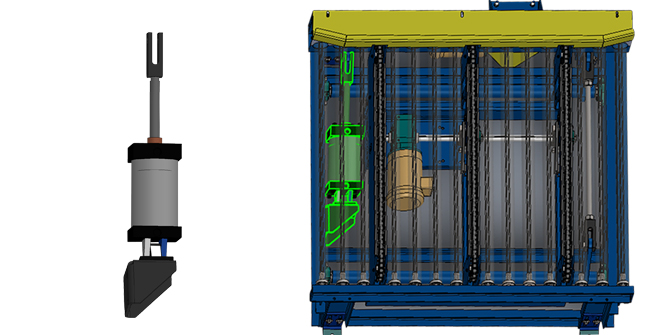
Providing the lift for the pop-up transfer, the cylinder must provide enough capacity to raise even the heaviest load. Although typically pneumatic, Alba offers a hydraulic option including a remote hydraulic power unit for freezer applications or whenever clean, dry air isn’t available. The cylinder is mounted to the transfer base with the cylinder’s rod end mounted to a clevis on the pivoting arms.
Pivot Arms |
|
Transferring the cylinder’s mostly horizontal actuation to the vertical lifting motion we expect from a transfer, the pivot arms are an extremely heavy-duty weldment which bears much of the weight during the lifting process. Pivot arms are attached to the cylinder on one side and the tie-rod on the other allowing the transfer carriage to raise and lower smoothly and evenly.
Tie-Rod |
|
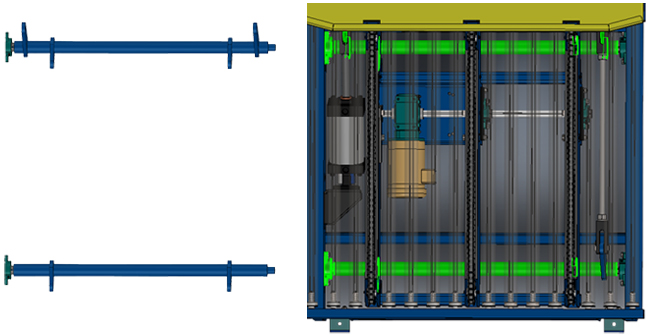
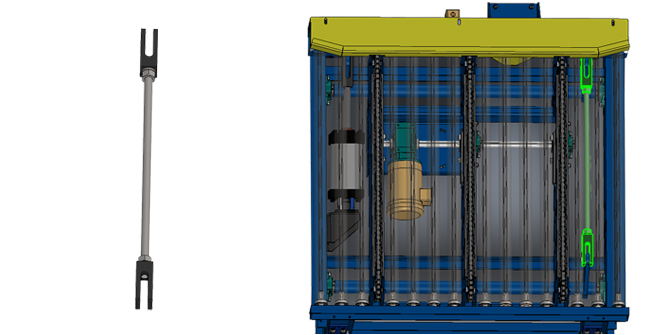
The tie-rod is typically on the opposite side from the cylinder and connects the lifting arms together ensuring the level lifting of the transfer carriage.
Transfer Carriage |
|
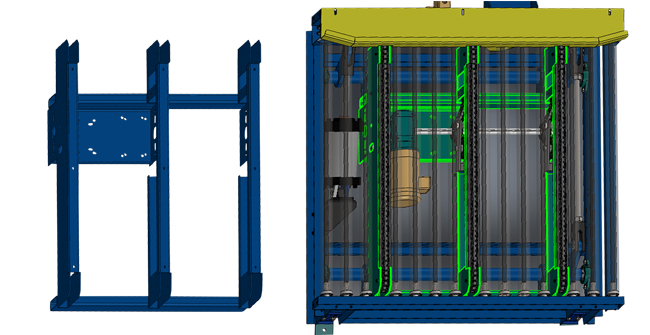
The transfer carriage forms the welded structure on which the transfer rails are fixed. This heavy-duty weldment helps provide the transfer’s rigidity and a sturdy platform for the chain drive to be mounted.
Transfer Chain Drive |
|
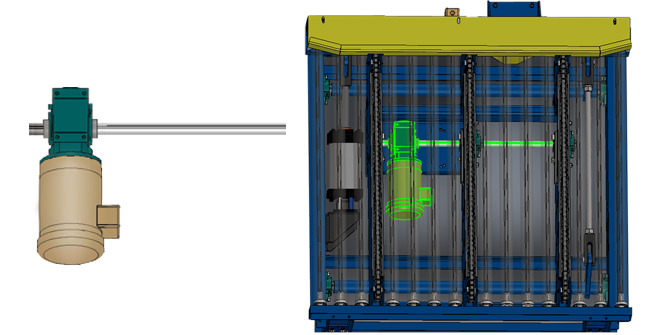
Often overlooked, the drag chain motor, gear box, and drive shaft, drives the transfer chains. This center-driven arrangement allows reversing of the chain motion to be part of the application. Motors can be sized up to 2HP, allowing speeds of up to 60 FPM in many instances.
Standardized Design. Multiple Configurations. |
|
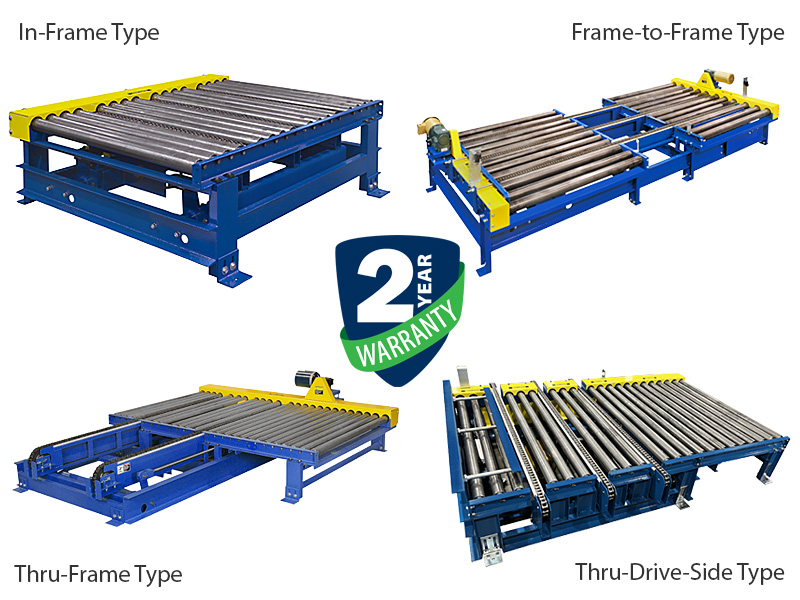
Although pallet handling applications differ, Alba incorporates the same fundamental four-point positive-lift mechanism across its standard chain transfer designs.
Four configurations are available:
These configurations accommodate different Chain Driven Live Roller (CDLR) conveyor layouts and directional requirements.
Standard construction includes welded structural steel frames, continuously welded sprockets, scalloped chain guards, and adjustable heavy-duty supports. Each standard transfer also includes a solenoid valve and proximity switches to sense raised and lowered positions.
Additional options include varying roller diameters, end stops, backstops, blade stops, transition rollers, and forklift barriers to meet specific application requirements.
Alba's standard chain transfers are shipped fully assembled and tested prior to shipment, helping simplify installation and integration into larger pallet handling systems.
Built Around the Requirements of the Application |
|
For OEMs, systems integrators, and distributors selecting the appropriate chain transfer involves more than simply determining load capacity. Pallet types and characteristics, conveyor system layout, operating environment, and directional requirements all influence equipment selection.
Alba's standardized and engineered transfers provide a proven mechanical design with the flexibility to accommodate different pallet handling applications.
For more information about Alba Manufacturing's heavy-duty positive-lifting chain transfers and available configurations, contact us today at 866.252.2634 or visit our website at www.albamfg.com to discuss. |