Cold-storage and freezer environments place unusual demands on industrial conveyor equipment. Low temperatures affect lubricants, motors, gear reducers, bearings, seals, sensors, and electrical components. Frost, condensation, and ice can also interfere with pallet movement and increase the risk of downtime.
A conveyor that works well in a standard warehouse may not perform reliably inside a freezer. Cold-storage applications require equipment designed around the operating environment from the beginning.
Alba Manufacturing designs and manufactures heavy-duty pallet handling conveyor equipment for demanding industrial applications, including refrigerated and freezer operations. Rugged construction, properly selected components, and application-specific engineering help Alba conveyors maintain dependable pallet movement in harsh conditions.
Why Freezers Are Hard on Conveyor Equipment
Cold temperatures change how mechanical components operate. Lubricants can thicken, seals may harden, and some materials can become brittle. These changes create additional resistance and place greater strain on motors, chains, bearings, and gear reducers.
Moisture creates another concern. Pallets moving from warm areas into a freezer may carry condensation into the cold zone. That moisture can freeze on rollers, chains, sensors, transfers, and structural components.
Ice buildup may reduce traction, affect sensor accuracy, restrict chain movement, and interfere with transfer operation. A freezer-rated conveyor system must account for temperature, moisture, load weight, pallet condition, operating cycles, and maintenance needs.
Heavy-Duty Construction Matters
The conveyor frame provides the foundation for reliable operation. Alba conveyor equipment is built with fully welded structural steel frames designed for heavy pallet loads and demanding production environments.
Rugged construction helps maintain alignment, limit frame flex, and provide stable pallet movement. It also helps equipment withstand vibration, frequent starts and stops, temperature changes, and the added mechanical resistance associated with cold conditions.
Freezer conveyors must be built for long-term service, not simply to operate correctly when first installed.
CDLR Conveyor for Freezer Applications
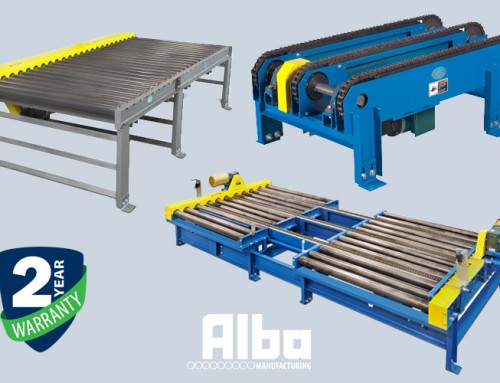
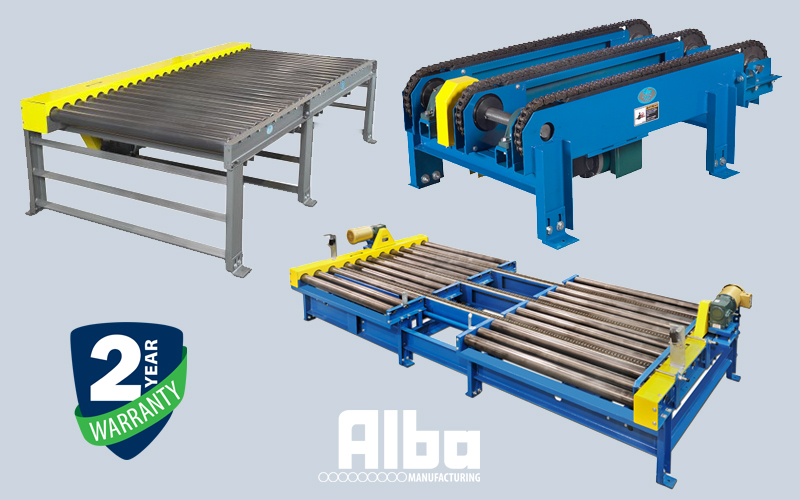
Chain driven live roller conveyor, commonly called CDLR conveyor, is widely used to move loaded pallets through manufacturing, distribution, palletizing, and cold-storage operations.
Alba CDLR conveyor can be configured with freezer-rated motors, reducers, bearings, lubricants, sensors, and electrical components. Powered rollers provide positive pallet movement, while the welded structural steel frame supports heavy loads.
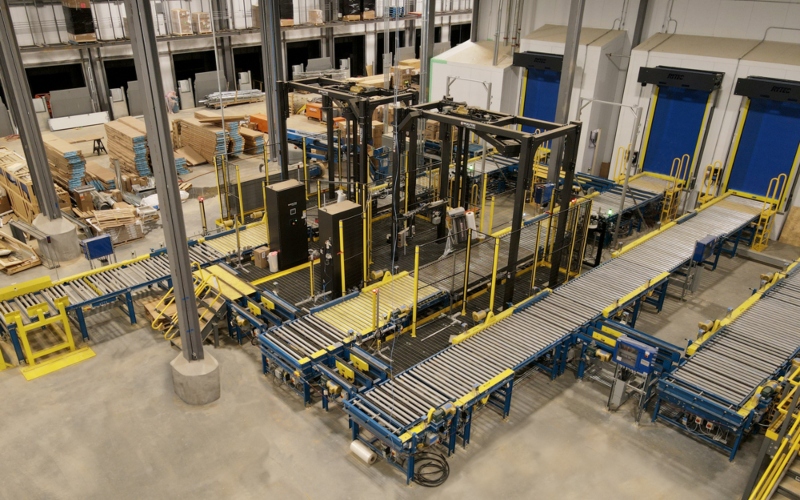
Typical freezer applications include pallet accumulation, robotic palletizing, stretch-wrapper lines, cold-storage staging, and transport between production and storage areas.
The conveyor design must consider pallet dimensions, load weight, roller spacing, speed, operating temperature, and pallet condition. Broken or uneven pallet boards may create additional handling problems when frost or ice is present.
Drag Chain Conveyor for Positive Movement
Drag chain conveyor is another dependable option, especially when pallet orientation or bottom-board construction makes roller conveyor less suitable.
Alba drag chain conveyor uses multiple strands of chain to support and move pallets. This provides positive engagement and controlled movement for heavy or uneven loads.
In freezer environments, chains, sprockets, lubricants, tensioning systems, motors, and reducers must be selected for the operating temperature. The conveyor should also provide practical access for inspection, adjustment, and maintenance.
Drag chain conveyor can be integrated with CDLR conveyor, chain transfers, turntables, shuttle cars, and other Alba equipment to create a complete pallet handling system.
Transfers Need Special Attention
Transfers are often among the hardest-working components in a conveyor system. They must lift and reposition heavy pallets while remaining aligned with adjoining conveyor sections.
Cold temperatures can affect lift mechanisms, actuators, seals, and lubricants. For certain sub-zero applications, Alba Manufacturing has used hydraulic lifting systems instead of electric cylinders. Hydraulic systems can provide the torque and reliability needed for heavy pallet transfers in environments approaching minus 20 degrees Fahrenheit.
The correct lifting method depends on load weight, stroke, cycle rate, temperature, available space, and maintenance requirements. Choosing the proper technology during system design can prevent reliability problems later.
Alba offers in-frame, thru-frame, frame-to-frame, thru-drive-side, and custom transfer configurations.
Every Component Must Be Freezer-Rated
Installing a freezer-rated motor does not make the entire conveyor suitable for cold operation. The complete system must be evaluated.
Motors, gear reducers, bearings, chains, seals, sensors, cables, connectors, and lubricants must all be appropriate for the expected temperature. Standard grease or oil may thicken inside a freezer and place additional strain on moving components.
Alba works with system integrators and component suppliers to select equipment based on temperature, load, operating schedule, and duty cycle.
Sensor placement is also important. Sensors should detect pallets accurately while limiting exposure to frost and physical damage. When practical, control panels may be installed outside the freezer to protect sensitive electronics and improve maintenance access.
Alba conveyor systems can include plug-and-play controls, quick-disconnect wiring, and non-proprietary components. Pre-wiring and testing equipment before shipment can simplify installation and reduce field troubleshooting.
Temperature Transitions and Condensation
Many systems move pallets between production areas, coolers, freezers, and shipping zones. These transitions can produce condensation that later freezes on conveyor components.
System designers should consider freezer doors, air curtains, pallet moisture, drainage, sensor locations, and areas where ice may collect. Conveyor controls may also need to communicate with high-speed doors and safety devices to manage pallet flow and limit warm-air infiltration.
Addressing these details early is more effective than solving them after installation.
Proven Performance in Cold Environments
Alba conveyor equipment has been used in cold-storage applications involving food production, robotic palletizing, packaged goods, and automated pallet transport.
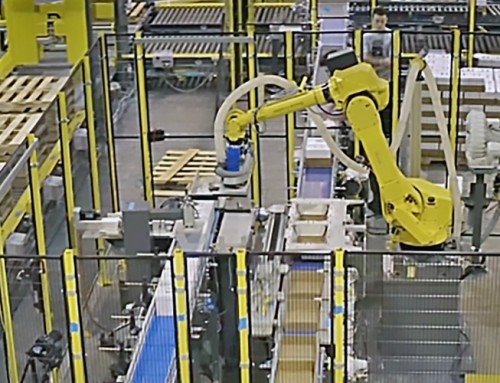
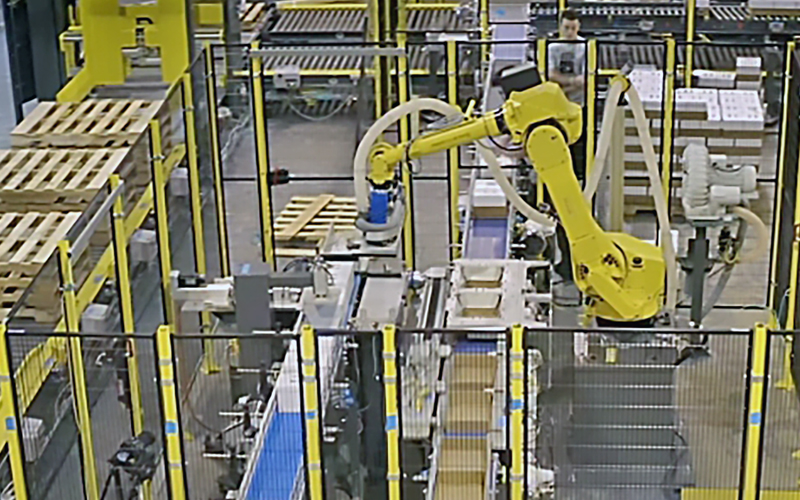
In one application for a leading ice cream producer, Alba partnered with Weldon Solutions to support robotic palletizing inside a freezer operating at approximately 15 degrees Fahrenheit.
Heavy-duty conveyor equipment transported pallets from the robotic cell to a stretch-wrapper line while supporting dependable operation in the cold environment.
Rock-Solid Conveyor for Freezer Operations
Freezer applications leave little room for weak components or design shortcuts. One failed motor, frozen sensor, damaged chain, or unreliable transfer can interrupt production and create costly downtime.
Alba Manufacturing builds heavy-duty CDLR conveyor, drag chain conveyor, chain transfers, turntables, shuttle cars, pallet dispensers, and related equipment that can be configured for freezer and cold-storage environments.
Contact Alba Manufacturing to discuss your freezer, palletizing, or automated pallet handling application and learn how Rock-Solid Conveyor can support reliable material flow in harsh conditions.