Pallet weight is one of the first things considered when designing a conveyor system, but it should not be the only consideration.
In heavy-duty pallet handling applications, impact loading is a real design consideration for Chain Driven Live Roller, or CDLR, conveyor, especially at forklift and AGV loading points. A conveyor should be engineered for the way pallets are actually introduced to the system, not simply for the rated weight of the pallet.
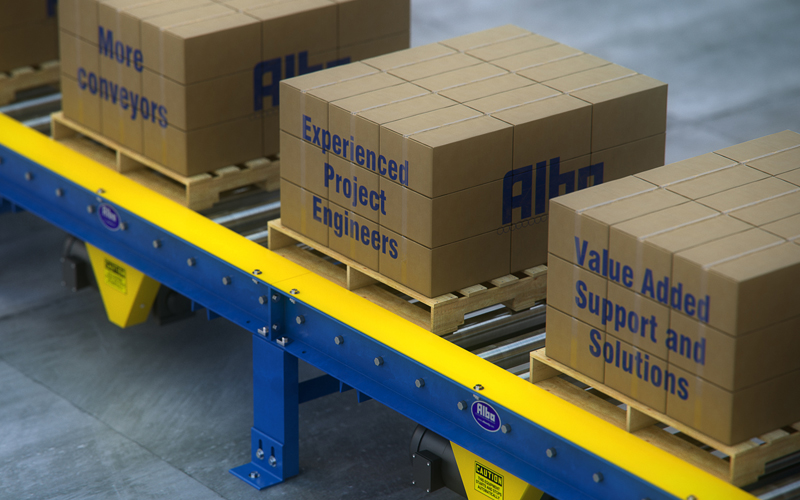
That distinction matters because a loaded pallet resting on a conveyor creates a different condition than the same pallet being lowered, dropped, or placed abruptly onto the rollers.
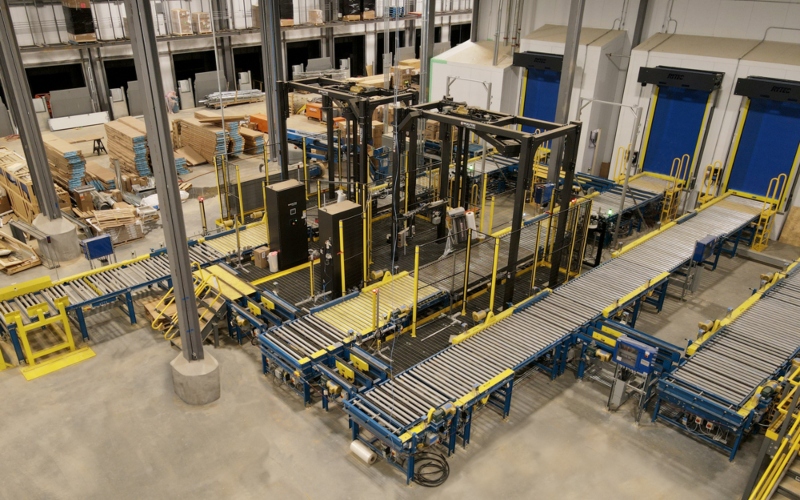
Alba Manufacturing designs heavy-duty CDLR conveyor systems around the actual application, including pallet size, pallet weight, loading method, operating environment, and how the conveyor will interact with forklifts, AGVs, and other material handling equipment.
What Is Impact Loading?
Impact loading occurs when a load is applied to the conveyor suddenly rather than gradually.
A pallet that is carefully lowered onto a conveyor places its weight on the rollers in a relatively controlled manner. If that same pallet is dropped several inches, placed unevenly, or set down aggressively, the conveyor can experience a much greater short-duration force.
This can happen at manual forklift loading stations, where pallet placement can vary from one operator or cycle to the next. It can also occur at AGV loading points if the vehicle, pallet position, conveyor height, or transfer sequence is not properly coordinated.
The amount of impact depends on several factors, including pallet weight, loading height, pallet construction, placement accuracy, roller spacing, and loading frequency.
That is why simply knowing a conveyor’s rated pallet capacity does not tell the entire story.
Why Heavy-Duty CDLR Construction Matters
Heavy-duty pallet conveyor needs to withstand more than the static weight of a load.
At loading points, the rollers and conveyor structure may repeatedly absorb additional forces as pallets are introduced to the system. Over time, these forces can affect rollers, bearings, axles, frames, supports, and anchoring if the equipment was not designed for the actual application.
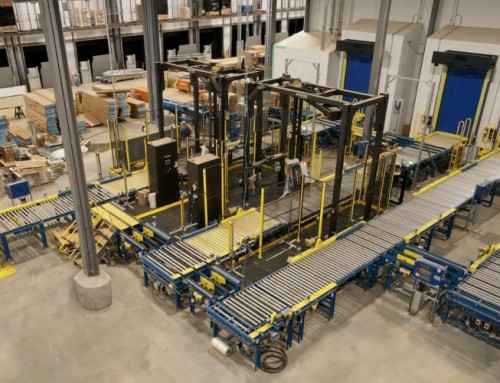
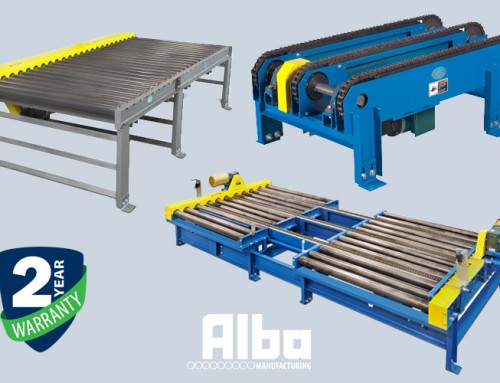
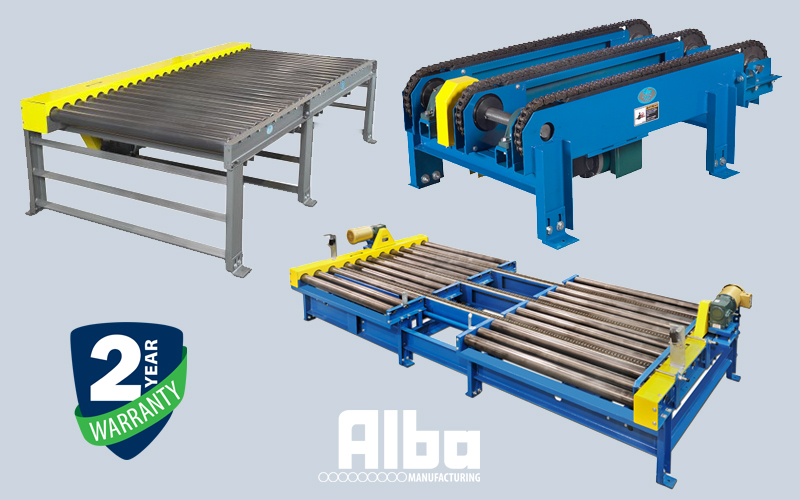
Alba CDLR conveyor is built for demanding industrial pallet handling applications using rugged structural steel construction.
Roller selection is especially important. Roller diameter, wall thickness, axle construction, bearing selection, and roller spacing all influence how the conveyor supports a pallet.
If a pallet initially contacts only one or two rollers, those rollers can experience more concentrated loading than when the pallet is fully supported across several rollers.
Pay Special Attention to Forklift Loading
Forklift loading points deserve careful consideration because they can experience repeated impact throughout the workday.
Forklift operators may approach the conveyor from slightly different positions, lower pallets at different speeds, or place loads slightly off-center. Even experienced operators will not place every pallet exactly the same way.
The conveyor loading section should therefore be designed around realistic operating conditions.
Important factors include maximum pallet weight, pallet dimensions, fork direction, loading height, approach direction, expected placement accuracy, and loading frequency.
Depending on the application, the forklift loading section may require heavier rollers, closer roller centers, additional supports, or reinforced construction compared with downstream conveyor sections.
Consider the Pallet Itself
Pallet type and condition also influence impact loading.
Wood, plastic, CHEP, GMA, captive, and custom pallets can distribute their weight differently across conveyor rollers. Damaged wood pallets may also create uneven contact points or place additional load on individual rollers.
Roller spacing should be selected so the pallet remains properly supported throughout the loading and conveying process.
Whenever possible, the load should be distributed across multiple rollers instead of being concentrated on only one or two contact points.
Strengthen High-Impact Areas
Not every conveyor section experiences the same loading conditions.
A forklift loading station may receive repeated impact while downstream conveyor sections simply transport pallets under controlled conditions.
For that reason, higher-impact areas may require different construction than the rest of the system.
Heavier rollers, closer roller spacing, additional supports, or other design changes can help strengthen areas where impact loading is expected.
This application-specific approach allows the system to be designed around actual operating conditions instead of treating every conveyor section exactly the same.
Plan for Real-World Operating Conditions
A successful CDLR conveyor system should be designed around how the equipment will actually be used.
Before selecting the conveyor, system designers should understand the maximum pallet weight, pallet type, loading method, loading frequency, placement accuracy, conveyor speed, transfer points, accumulation areas, and stopping locations.
There is an important difference between designing a conveyor that can carry a pallet and designing one that can reliably handle that pallet being loaded hundreds or thousands of times.
Alba Manufacturing’s heavy-duty CDLR conveyor systems are engineered around the application. When forklift or AGV loading is involved, impact loading should be considered from the beginning.
The system should be designed for the actual loading method, operating conditions, and pallet characteristics—not just the pallet’s rated weight.
Planning for impact loading early can help reduce equipment damage, limit unnecessary maintenance, and provide dependable pallet handling for years to come.