Automation is changing the way warehouses and distribution centers move, store, and manage palletized products. Robotics, Automated Storage and Retrieval Systems (AS/RS), palletizing equipment, Autonomous Mobile Robots (AMRs), and automated guided vehicles (AGVs) can improve productivity, but these technologies still depend on one fundamental requirement: reliable product movement.
That is where conveyor equipment plays a critical role.
Alba Manufacturing designs and manufactures heavy-duty pallet handling conveyor systems that can serve as the connection between automated processes. By moving pallets accurately from one operation to the next, conveyor equipment helps manufacturers and distribution centers improve automation, accuracy, throughput, and uptime.
Connecting Automated Systems
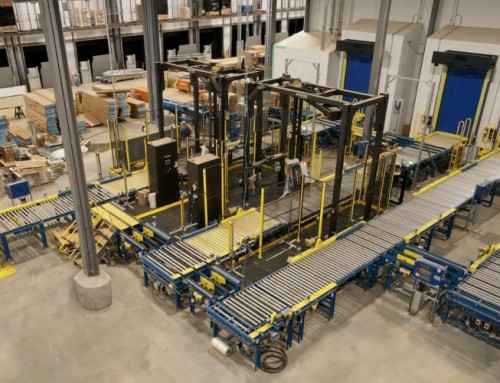
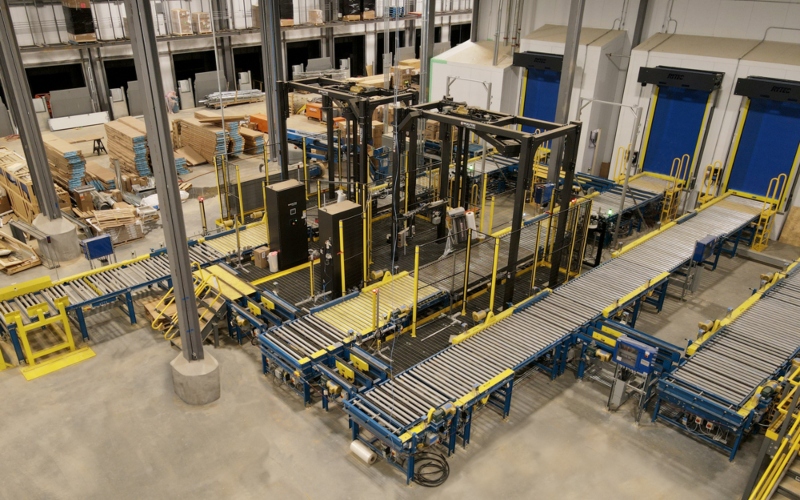
A highly automated facility may contain several pieces of equipment performing different functions. Robotic palletizers build loads. Stretch wrappers prepare pallets for shipment. AS/RS equipment stores and retrieves products. AMRs and AGVs transport pallets between production and storage areas.
Conveyors help connect these individual technologies into a coordinated material handling system.
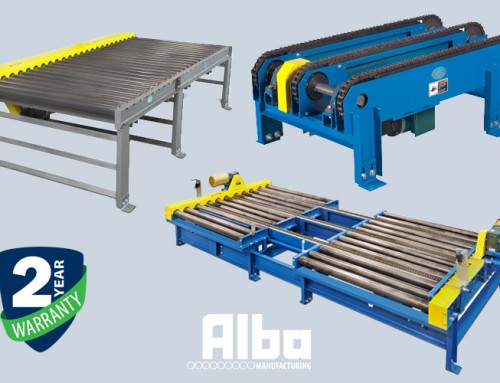
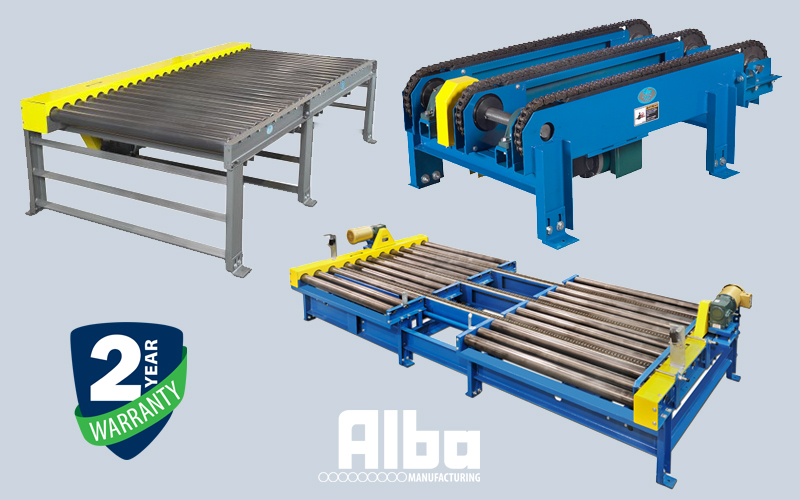
Alba Chain Driven Live Roller (CDLR) conveyors, drag chain conveyors, chain transfers, turntables, shuttle cars, and other pallet handling equipment can be configured to move loads between automated processes while maintaining the proper pallet orientation and position.
The goal is straightforward: keep pallets moving smoothly and predictably so the automation surrounding the conveyor can perform as designed.
Conveyor Integration with Robotics
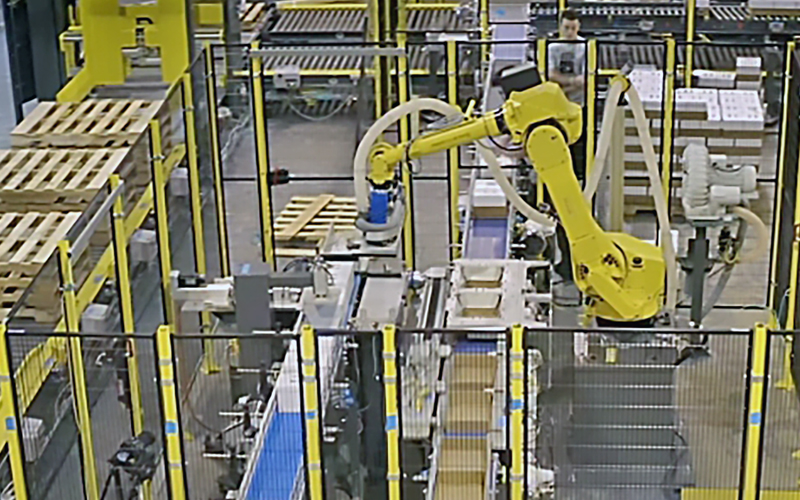
Robotic palletizing and depalletizing systems require pallets to arrive at precise locations. Even small positioning inconsistencies can interfere with robotic operations.
Conveyor systems can provide controlled pallet movement into and out of robotic cells. CDLR conveyors are commonly used to transport palletized loads, while transfers, turntables, and other equipment can change pallet direction or orientation when needed.
Alba also offers conveyor configurations that accommodate interaction with AMRs. Split-roller CDLR designs, for example, can provide an opening beneath the pallet so an AMR can position itself under the load for pickup or delivery.
The conveyor and robot should not be treated as separate pieces of equipment. Their mechanical interface, elevations, pallet positions, controls, and operating sequence must work together.
Supporting AS/RS Operations
Automated Storage and Retrieval Systems depend heavily on consistency. Before a pallet enters an automated storage system, it must typically be positioned correctly and presented at the required elevation and orientation.
Heavy-duty conveyor equipment provides the transportation link between receiving, production, storage, and shipping processes.
Depending on the application, conveyors may accumulate pallets before an AS/RS station, transfer loads between conveyor types, or route pallets to different storage or processing areas.
Reliable pallet presentation becomes especially important because a problem at the conveyor interface can affect the entire automated system. Properly engineered conveyor equipment helps reduce these interruptions and keeps pallets flowing into and out of storage.
Improving Accuracy Through Controlled Pallet Movement
Automation requires repeatability.
Forklift operators can make adjustments when a pallet arrives slightly out of position. Automated equipment may not have that flexibility.
Conveyor systems help establish consistent pallet locations, travel directions, spacing, and stopping points. Sensors and controls can monitor pallet movement and coordinate conveyor zones with upstream and downstream equipment.
Alba’s conveyor systems can also incorporate controls designed to communicate with other equipment in the automated system, helping integrators create coordinated operating sequences.
Protecting Uptime with Heavy-Duty Construction
An automated facility can produce significant volumes, but higher throughput also increases the consequences of downtime. If one important conveyor stops, multiple automated processes may eventually stop with it.
For that reason, conveyor selection should consider more than pallet weight.
Pallet type, load weight, throughput, forklift or AGV interaction, impact loading, operating environment, maintenance access, and surrounding automation should all be considered during system design.
Alba Manufacturing builds heavy-duty pallet handling equipment using welded structural steel construction and application-specific designs intended for demanding industrial environments.
Proper component selection and accessible maintenance points can also help simplify service and reduce unnecessary downtime.
Building Automation Around the Application
There is no single conveyor arrangement that works for every automated warehouse or distribution center.
The right solution depends on how pallets enter the system, where they need to go, how quickly they must move, and which automated technologies they must interact with along the way.
By engineering conveyor equipment around the actual application, Alba Manufacturing helps system integrators, OEMs, and end users create dependable material handling systems that bring robotics, AS/RS, palletizing equipment, AMRs, AGVs, and other technologies together.
In a modern automated facility, conveyor equipment is more than a way to move pallets from Point A to Point B. It is the infrastructure that helps individual automation technologies operate as one coordinated system.